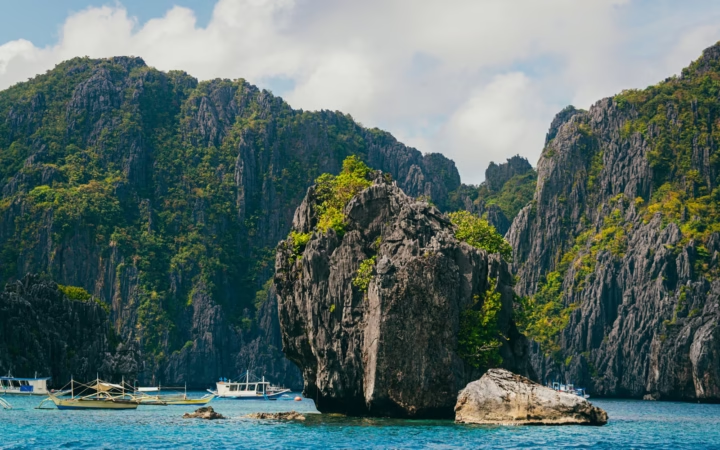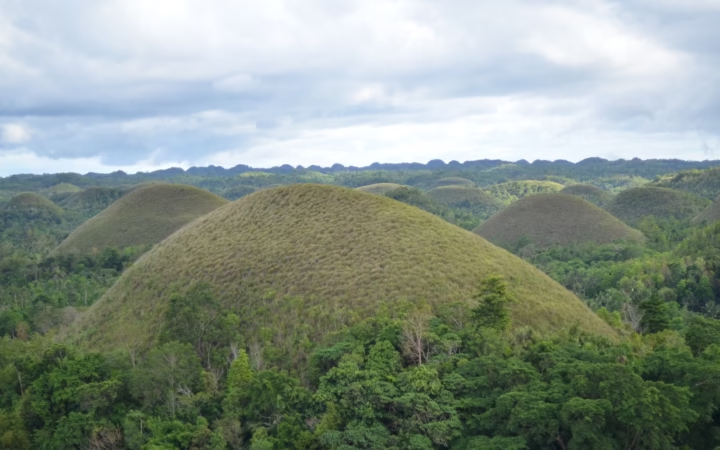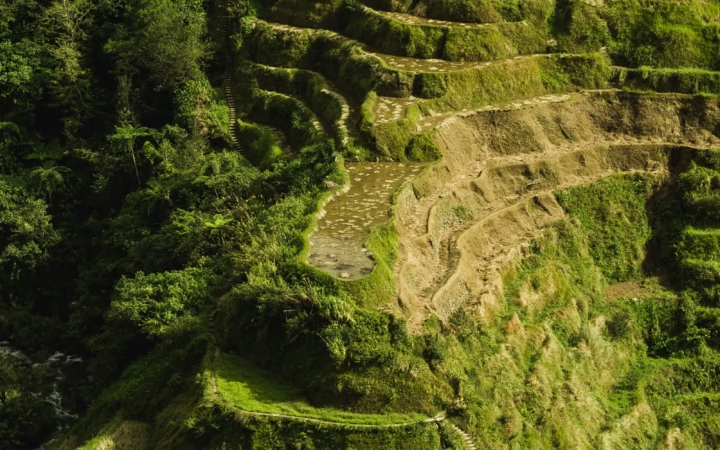
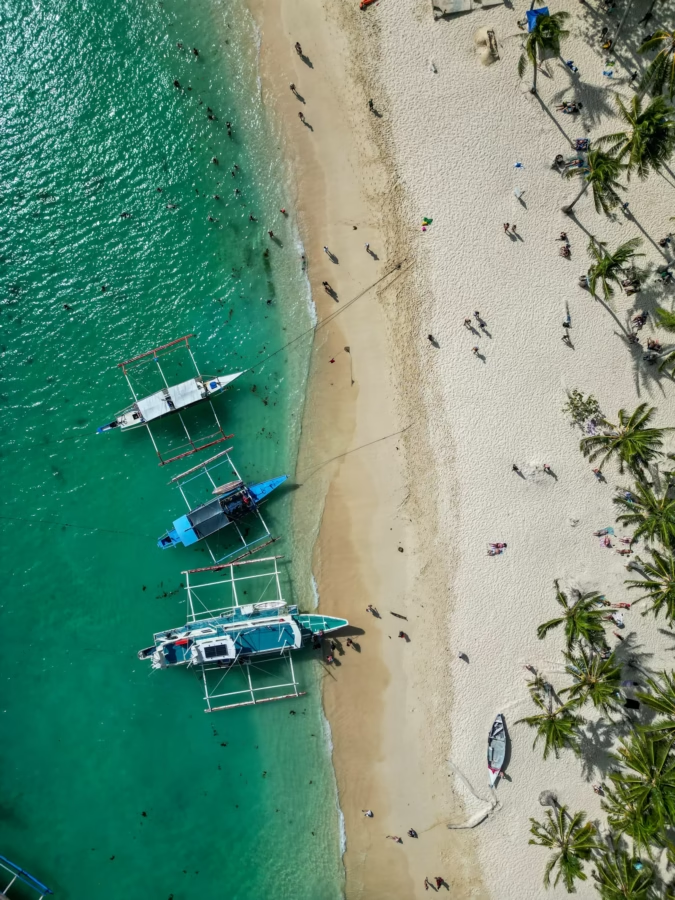
Compare six island escapes by gateway, travel effort, budget questions, and the experience you actually want.
Sources reviewed: .
Prepared by: PinoyTips, using the destination, operator, and agency references linked below. This is a desk-researched planning guide, not a claim of firsthand visits. Confirm departures, fees, and access for your travel date.
Looking for hidden gem islands in the Philippines? Start with the kind of trip you want: beach camping in Calaguas, an island-hopping day in Gigantes, a beach-and-cave break in Camotes, snorkeling around Apo Island, a slower Siquijor stay, or a lagoon-and-cave excursion around Bucas Grande. These are the six destinations compared below. [1] [4] [5] [7] [10] [13]
Here, hidden gem means an alternative to a familiar itinerary, not an undiscovered or reliably empty place. These destinations have local communities and established visitor activities. Choose for the experience and the route, rather than expecting every stop to be secluded. Sohoton Cove is an attraction on Bucas Grande, not a separate island. [13]
Quick take: Choose one destination near your existing route, not all six in one rushed trip. Our planning suggestions favor Camotes for a Cebu-based break, Apo Island for a dedicated marine day from the Dumaguete area, and two or three nights on Siquijor for a less hurried stay. Calaguas, Gigantes, and Sohoton need particularly careful coordination of mainland transport and boats.
Which hidden gem island fits your trip?
The suggested stays below are PinoyTips planning recommendations, not operator timetables. They allow time to enjoy a destination but do not replace a buffer before an important flight or onward connection. On a phone, swipe the table sideways to view all columns.
| Destination | Gateway to plan around | Suggested time and main appeal |
|---|---|---|
| Calaguas | Paracale or Vinzons, Camarines Norte; boat to the Calaguas group. [1] [2] | At least one island night, with separate mainland travel time. Beach camping and a slower shoreline stay. |
| Gigantes | Bancal Port, Carles; reach it overland from Iloilo or Roxas. [4] | One full tour day; staying near the port beforehand reduces a rushed early transfer. Multiple beaches and rock formations. |
| Camotes | Danao City to Consuelo is one route to check with the ferry operator. [5] [6] | Two nights for beaches, a lake, and separate cave stops rather than a same-day dash. |
| Apo Island | Dumaguete-area base; confirm Malatapay or your operator’s Dauin departure point. [7] [9] | One dedicated excursion day, with a mainland night before an important connection. Guided snorkeling or diving. |
| Siquijor | Dumaguete ferry connection, or a date-specific service from Cebu or another gateway. [11] [12] | Two or three nights. Combine coast, waterfalls, and heritage stops without rushing around the island. |
| Sohoton / Bucas Grande | A confirmed Siargao departure, or a separately arranged Socorro-based visit. [13] [14] | A full excursion day from Siargao. Lagoon scenery and locally permitted cave activities. |
1. Calaguas Islands, Camarines Norte
Go for: a beach-focused camping trip. Mahabang Buhangin on Tinaga Island is the shoreline most visitors associate with Calaguas. The appeal is time beside the water rather than a schedule of shops and urban attractions. [1]
Getting there: confirm whether your boat leaves from Paracale or Vinzons before arranging mainland transport. A Manila departure can involve overnight road travel before the sea crossing. KD Travel and Tours’ sample itinerary allocates roughly two hours for the boat leg, but this is an itinerary estimate, not a fixed crossing time. [1] [2]
How to plan the stay: arrive, settle into your accommodation, and leave room for beach time instead of immediately adding every possible side trip. An overnight stay is our suggested minimum on the island itself. Include the previous night’s road travel and the return journey when counting leave days.
Check before paying: ask for the actual campsite or property name, tent occupancy, bedding, toilets, bathing water, drinking water, meals, charging arrangements, and boat-return plan. Do not assume either hotel-level facilities or a complete absence of services. Accommodation and facilities differ by provider. [1] [2]
Budget questions: is the price for a mainland meet-up or Manila pickup? Are both boat journeys included? Are beach entry, environmental charges, the tent, and meals prepaid? Keep the answers together with the cancellation terms. The operator example in the budget section is a reference, not a confirmed fare for your dates.
2. Gigantes Islands, Iloilo
Go for: several island stops in one excursion, including beaches, limestone scenery, and seafood when included in your chosen meal plan. Common itineraries feature Cabugao Gamay, Bantigue Sandbar, and Tangke Lagoon, but the final stops depend on the package and conditions. [4]
Getting there: Bancal Port in Carles is the main planning point for many tours. Compare flights into Iloilo and Roxas together with the land transfer, rather than choosing an airport by airfare alone. The travel guide referenced below describes approximately three to four hours from Iloilo City to Bancal; this is a planning estimate, not an airport-to-boat guarantee. [4]
How to plan the day: our recommendation is to stay in or near Carles the night before an early departure when the alternative is a very tight road transfer. Arrange the meeting time, return point, and ride back before starting. Do not put a nonrefundable flight immediately after the expected boat return.
Check before paying: distinguish the joiner-tour price from airport transfers, accommodation, environmental charges, and optional activities. Request the boat’s passenger limit and properly fitting life jackets. Ask what happens to the price and route when a stop is unavailable. These are questions to resolve in writing, not benefits to assume.
What not to promise yourself: an empty viewpoint, an exposed sandbar at any tide, or an identical route every day. Tell the organizer which stop matters most to you, then ask about its access window and alternatives. Budget seafood according to the actual menu, especially with allergies or dietary restrictions.
3. Camotes Islands, Cebu
Go for: a mix of beach time and inland sightseeing. Keep Lake Danao, Timubo Cave, and Bukilat Cave separate in your plan. Lake Danao is a lake attraction, not the location of the cave pools. Santiago Bay adds a coastal stop to the itinerary. [5]
Getting there: one route is overland from Cebu City to Danao City Port, then by ferry to Consuelo in Camotes. Destination guidance puts this sea leg at around two to two and a half hours, excluding the road journey, check-in, and onward transfer. Consult Jomalia’s booking channel for your date; do not copy an old departure list into a tight connection. [5] [6]
How to plan the stay: we suggest two nights, with a beach-and-lake day and a separately planned cave outing. Ask your accommodation to group stops by location. A list of attractions is not a realistic driving route until you have considered where you are staying and which port you use.
Local transport: agree on the duration, route, waiting time, and total price of a hired vehicle or guided trip. A scooter is optional, not essential. Choose a driver instead when you lack the appropriate license, experience, or confidence for the roads.
Budget and access: reserve money for return ferry tickets, port-to-hotel transport, sightseeing transport, and individual attraction charges. Confirm opening, tide-related limitations, and allowed activities with each site. A cave photograph does not establish today’s water depth or whether swimming is permitted. Check the exact arrival port rather than treating every service labeled “Camotes” as interchangeable.
4. Apo Island, Negros Oriental
Go for: a guided marine excursion, not a guaranteed wildlife encounter. Apo Island is an established snorkeling and diving destination. Treat turtle sightings as a possibility rather than something anyone can responsibly promise on your specific visit. [7] [8]
Getting there: Malatapay in Zamboanguita is a recognized mainland gateway, but some operators depart from their own base in Dauin. These are different meeting points. Confirm the exact pin and whether your quotation includes transport from Dumaguete before booking a ride. [7] [9]
Budget and inclusions: check boat transfers, island entry, snorkeling guide, mask and snorkel, flotation equipment, meals, and mainland transport separately. Rental or supplied snorkeling equipment is available through some operators, so you do not automatically need to buy your own set. Diving fees and snorkeling charges are not interchangeable. [7] [8]
In the water: stay with the guide, follow the permitted route, and keep clear of turtles and coral. Do not touch, chase, feed, or block wildlife for a photograph. Ask the operator to match the activity to your swimming confidence and mobility; a life jacket alone does not make every site suitable. [15] [18]
Our planning recommendation: make Apo a dedicated excursion from a Dumaguete-area base, with a flexible return and a mainland night before an important onward trip. Ask where nonswimmers can wait, how boat boarding works, and which parts can be skipped. Rough conditions may mean postponing the excursion rather than substituting another exposed crossing.
5. Siquijor
Go for: several unhurried days combining beaches, waterfalls, and heritage. Siquijor is not an undiscovered island, and its provincial tourism office describes Cambugahay Falls as a major visitor attraction. A quieter trip depends on your chosen base, timing, and activities, not the “hidden gem” label. [10]
Getting there: Dumaguete is an established ferry gateway. OceanJet also lists Cebu-Siquijor among its routes. Check the actual itinerary, intermediate calls, arrival port, and total elapsed time for the ticket you select. A Cebu service should not be described as equivalent to the shorter Dumaguete approach. [11] [12]
How to plan the stay: allow two or three nights if your schedule permits. Set aside one day for selected coastal and heritage stops, and another for a waterfall visit or a slower beach day. Do not treat the ability to drive around the island as a reason to visit every attraction in a single afternoon.
Activities: discuss stairs, slippery paths, swimming areas, and any optional jumps or swings before joining a waterfall stop. You can enjoy a viewpoint without taking part in a water activity. Follow current site instructions rather than assuming that a feature shown in an older video remains open. [18]
Budget and services: compare the ferry, arrival transfer, room, meals, local transport, and attraction fees. Siquijor does have banks, but that does not guarantee a nearby working ATM or card acceptance where you will stay. Bring cash for the known portion of your trip and ask the property about payments and connectivity. [20]
6. Sohoton Cove and Bucas Grande
Go for: a lagoon-and-cave excursion around Bucas Grande in Socorro, Surigao del Norte. Sohoton’s landscape includes waterways enclosed by limestone hills. It is separate from the main island of Siargao even when sold as a Siargao day tour. [13]
Getting there: confirm the actual Siargao pickup and departure port, whether the trip uses a General Luna departure or a Dapa/Socorro connection, and whether smaller local boats are included. Plan this as a full excursion day, not a short hop between other activities. Del Carmen’s Sugba Lagoon outing is a different trip; check that the booking explicitly names Sohoton or Bucas Grande. [14]
Access and timing: ask the organizer to explain the day’s workable tide window, open cave sections, transfers, and return plan. Cave activities can involve entering water, confined spaces, or climbing. Tell the guide beforehand which activities you will not do, and confirm an alternative waiting arrangement. [14]
Jellyfish viewing is not a guaranteed swim. An older report describes a swimming restriction in the jellyfish area, while a local travel platform describes guided paddleboat viewing. These are not a substitute for current site instructions. Plan on guided viewing and follow the sanctuary staff’s current instructions. Stay in the boat unless entry is expressly permitted. Never handle or lift jellyfish, and do not expect a particular number of animals. [14] [15] [19]
Budget questions: distinguish the long transfer boat from local guide, smaller-boat, sanctuary, and activity charges. Ask whether lunch, drinking water, and all planned entries are included. A package price is not necessarily the same as the amount payable at the site. We have not established a current official all-in tariff for this excursion.
What to budget for these island trips
Compare trips from the same starting point and with the same inclusions. A boat-only rate, a port meet-up day tour, and a Manila pickup package cannot be compared as though they buy the same service. Count nights in transit as well as nights at the destination.
The following are advertised examples observed on October 2, 2026, not official tariffs or quotes for your dates. The Calaguas and Gigantes listings do not clearly state rate-validity dates. Confirm availability, group minimums, exclusions, holidays, and the final payable total directly. These source links are not affiliate booking links.
| Published offer | Advertised reference price | What to verify |
|---|---|---|
| Calaguas: KD Travel, 2D1N joiner package | ₱2,999 per person; tent sharing. [2] | Manila pickup, both boat transfers, stated meals and fees, tent occupants, and minimum-group rules. The rate page does not establish validity for your date. |
| Gigantes: Tour A day trip | ₱1,299 per person on the package list. [3] | Exact route, port meeting point, mainland transfers, entry charges, and meal inclusions. Do not assume it includes travel from Iloilo or Roxas. |
| Apo: Harolds basic package | ₱1,500 per person; Dauin meet-up. [7] | Lists boat, entry, mask and snorkel. Confirm the guide and all required charges; do not assume the premium inclusions apply. |
| Apo: Harolds premium package | ₱2,800 per person; Dumaguete-to-Dauin arrangement. [7] | Lists round-trip land transfer, packed lunch, snorkeling guide, boat, entry, and mask/snorkel. Confirm your pickup and final quote. |
For Camotes, Siquijor, and Sohoton, obtain a date-specific quote instead of relying on a single all-in figure. Keep a simple budget with mainland transport + boat/ferry + accommodation + local activities + meals + excluded fees + a delay reserve. Ask whether each amount is per person, per room, per vehicle, or per boat. Avoid paying a fee twice when it is already included in a package.
Practical tips for visiting off-the-beaten-path islands
Choose the weather window, not just the month
There is no single month that guarantees good conditions across all six destinations. PAGASA describes regional rainfall differences, and a broad dry-season label does not establish safe conditions on your boat route. Consult PAGASA’s gale warnings, the operator, and local port authorities before departure. [16] [17]
Our recommendation is to keep a mainland or home-base alternative, such as a rest day or a locally confirmed land activity, rather than pressuring a boat crew to proceed. Leave room for an extra night before a major connection. A spare day reduces scheduling pressure; it does not guarantee that every disruption will fit into that day.
Get the practical details in writing
- Return journey: exact return port, expected finish, final transfer, and what happens after cancellation or a shortened route.
- Accommodation: named property, room or tent occupancy, water, toilets, electricity, meals, and check-in arrangements.
- Access needs: boarding method, stairs or wet landings, child-sized life jackets, swimming requirements, and an option to sit out activities. [18]
- Cash and communication: your prepaid items, remaining local charges, offline booking details, an emergency contact, and a reserve for delays. Verify mobile coverage with your exact property, not an island-wide assumption.
Use marked paths, ask permission before photographing people, and leave natural materials where they are. For marine outings, keep away from coral and wildlife and follow the guide’s briefing. More visitors should not mean more pressure to touch animals or enter closed areas. [15]
What to pack, with optional gear links
Pack for the actual activity rather than buying a product for every destination. Start with drinking water, sun-protective clothing, a hat, swimwear when relevant, a towel, secure footwear suited to the operator’s instructions, personal essentials, small peso notes, offline bookings, and a charged phone. Ask what your tour supplies before carrying duplicates.
A splash-resistant bag can be useful on boat transfers, but use equipment according to its stated limitations. Ask the snorkeling operator about gear availability and fit before purchasing a set. A hammock is optional and only appropriate where the property permits hanging it. None of these products replaces the operator’s required safety equipment.
Affiliate disclosure: As an Amazon Associate I earn from qualifying purchases. The optional Amazon links below may earn PinoyTips a commission at no additional cost to you.
This is a packing guide, not a hands-on product test. Check the exact model, sizes, included pieces, safety instructions, seller, price, and delivery availability on the product page. Read our Affiliate Disclosure.

Image: eaglesnestoutfittersinc.com
Optional hammock
ENO DoubleNest Hammock
Confirm hanging permission and the required suspension equipment.
View on Amazon
Image: seatosummit.com
Dry-bag option
Sea to Summit Lightweight Dry Sack Set
Check capacity and water-protection limitations rather than assuming it is suitable for submersion.
View on Amazon
Image: cressiamerica.com
Personal snorkeling gear
Cressi Palau SAF Snorkel Set
Check fit and whether the tour already includes suitable equipment.
View on AmazonProduct photos show the versions pictured. Confirm the exact color, size, model, and included pieces on Amazon before ordering.
Frequently asked questions
Are these islands genuinely hidden?
Not in the sense of being unknown or untouched. This is a shortlist of different island experiences, including established visitor destinations. Choose the route, accommodation, and activities that fit you instead of treating the phrase “hidden gem” as a promise of solitude.
Which destination should I consider with limited time?
Our recommendation is to start with your existing base. Consider Camotes with a Cebu itinerary, Apo Island with a Dumaguete-area stay, or Siquijor when you can allow a few nights. These suggestions reduce unnecessary repositioning; they are not a promise of daily services or same-day connections. [5] [7] [11] [12]
Can I visit all six on one trip?
You can plan a longer journey around them, but we do not recommend treating this list as one quick island-hopping circuit. First choose a region and count the road, airport, ferry, and return-transfer days. Keep the remainder for a separate trip rather than making every day a connection.
Do I need cash, and will my phone work?
Carry enough pesos for the local charges you have confirmed and a delay reserve. Coverage and payment options need property-level checks. Do not assume every island has no services, or that an available bank means an ATM will be nearby or working when needed. [20]
Are turtles at Apo Island guaranteed?
No. Book for the snorkeling or diving experience, not a guaranteed sighting. Keep your distance from wildlife and follow the guide’s route and environmental briefing. [15]
Can I swim with the jellyfish at Sohoton?
Do not assume so. Older guidance describes a swimming restriction in the jellyfish area. Confirm the permitted activity with sanctuary staff, plan on guided viewing, and do not enter the water without express permission. Never touch or lift the animals. [14] [15] [19]
Is a guided tour suitable for nonswimmers or young children?
Ask about the exact boat, boarding arrangement, life-jacket sizes, waiting area, and individual activities. A package described as family-friendly may still include wet landings, stairs, or water entry. Explain your group’s needs and confirm a suitable alternative to any activity you will skip. [18]
Sources and corrections
Sources were reviewed on October 2, 2026. The six-destination shortlist comes from the earlier PinoyTips article. Route clarifications and selected published price examples were added through desk research. Suggested stays and booking checklists are editorial recommendations. No operator was contacted to guarantee availability, and this guide does not confirm a current official fee schedule for every destination.
- Philippines Travel: Calaguas Islands.
- KD Travel and Tours: 2D1N Calaguas package.
- Gigantes Islands Travel and Tours: packages.
- Philippine Beach Guide: Gigantes travel guide.
- Philippines Travel: Camotes Islands.
- Jomalia Shipping: schedule and fares.
- Harolds Dive Center: Apo Island snorkeling tour.
- Philippine News Agency: Apo Island diving fees, May 20, 2026.
- Philippine News Agency: Dauin and Malatapay access, June 28, 2024.
- Siquijor Provincial Tourism Office: coastal tour.
- OceanJet: official booking and destinations.
- Siquijor Provincial Tourism Office: how to get there.
- Surigao del Norte Provincial Government: Socorro.
- Koobo: Socorro travel guide.
- Green Fins / The Reef-World Foundation: environmental role model.
- PAGASA: climate of the Philippines.
- PAGASA: gale warning.
- Philippine Information Agency: Coast Guard water-safety advice.
- VisMin: Sohoton Cove, October 19, 2020.
- Siquijor Provincial Tourism Office: banks.
Have a correction? Email admin.pinoytips@gmail.com with the destination, the date of your information, and an official notice or operator reference where available. Avoid sending personal booking documents or identification details. Learn more about PinoyTips or use our contact page.
Travel information note: This article is for planning, not a booking confirmation, safety clearance, or guarantee of access. Local instructions, weather, fees, and operating arrangements can change. Follow the responsible operator and site authorities. See our Disclaimer.