
Typhoon season shows up in nearly every Philippines trip-planning conversation, often with more alarm than the actual risk warrants for most travelers. The reality is more manageable than it sounds: the Philippines sits in one of the world’s most active tropical cyclone zones, but the country also runs one of the most practiced storm-warning and response systems anywhere, precisely because it deals with this every single year.
This guide covers when typhoon season actually runs, how the local warning system works, which regions carry the highest risk, and the practical habits that let you travel through this window with genuine flexibility instead of either ignoring the risk or cancelling a trip that would likely have been fine.
Quick take: Typhoon season runs roughly June through November, peaking in August, September, and October. Check PAGASA’s signal for your specific province before deciding whether a storm actually affects your trip.
When Typhoon Season Actually Runs
An average of about 20 tropical cyclones enter the Philippine Area of Responsibility each year, and roughly 8 to 9 of those actually make landfall. The season technically runs year-round, but activity is heavily concentrated from June through November, with August, September, and October standing out as the most active stretch.
That leaves a genuinely long window, December through May, that carries minimal typhoon risk, which is exactly why that period doubles as the country’s peak tourist season for reasons well beyond just avoiding storms.
Understanding PAGASA’s Warning Signals
The Philippine Atmospheric, Geophysical and Astronomical Services Administration, PAGASA, issues Tropical Cyclone Warning Signals numbered 1 through 5, and the number tells you two things at once: expected wind strength and how much lead time you have before it arrives.
Signal 1 covers winds of roughly 39 to 61 kph expected within 36 hours, which in practice often means little more than a rainy, blustery stretch with normal life continuing close to usual. Signal 5, the highest level, covers winds above 220 kph expected within 12 hours and is reserved for genuinely dangerous super typhoons, the kind that make international news. Signals 2 through 4 sit between these, with progressively stronger winds and shorter lead times.
A useful habit: don’t treat a warning signal as a single number to panic over without context. Check which signal level is affecting your specific province, since a Signal 3 raised for a province you’re nowhere near tells you nothing about the town where you’re actually standing.
Storm Surge: The Risk That Matters Most
Storm surge, the abnormal rise in sea level a typhoon’s winds and low pressure push ahead of it, is the leading cause of typhoon-related deaths in the Philippines. It’s worth understanding specifically because even a relatively low Signal 1 or 2 storm can produce a dangerous surge in low-lying coastal areas. This is why local evacuation orders sometimes seem to move faster or more aggressively than the wind signal alone would suggest to an outsider: officials are frequently responding to surge risk specifically, separate from wind speed.
If you’re staying somewhere directly on a low-lying beach or near a river mouth during an active storm warning, take local evacuation guidance seriously even if the wind signal itself sounds mild.
Which Regions Carry the Highest Risk
Eastern Samar, Leyte, and the broader eastern Visayas and Bicol regions sit most directly in the typhoon corridor and see the most frequent direct landfalls historically. Northern and central Luzon see regular activity too. Mindanao, by contrast, sits largely outside the main typhoon track and experiences meaningfully less direct impact, which is part of why destinations like Davao and Siargao remain comfortable choices even during the peak of the season for the rest of the country.
Palawan and the western Visayas see somewhat less direct typhoon activity than the eastern corridor as well, though they’re not entirely exempt and still get affected by the wider wet season’s general rainfall.
Monitoring a Storm Before and During Your Trip
Check PAGASA’s official site or app directly for your specific destination province rather than relying on international headlines, which tend to describe a typhoon hitting the Philippines in ways that can refer to a storm making landfall hundreds of miles from where you actually are. The Joint Typhoon Warning Center is a useful secondary source if you want an independent international perspective on a storm’s projected track.
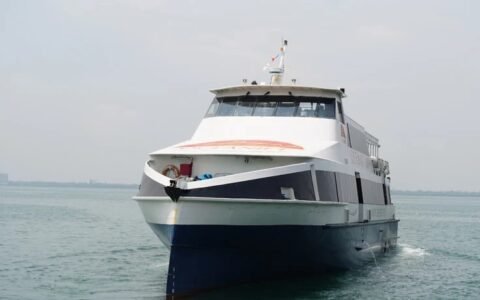
Once you’re on the ground, your accommodation’s front desk is often your best real-time source, since staff are following local advisories closely and can tell you plainly whether a warning affects your specific area or is a routine seasonal update. Domestic airlines and ferry operators also post advisories directly and are typically proactive about cancelling routes ahead of a serious storm rather than risking passengers, so a cancellation notice from them is a reliable signal that conditions warrant a change of plan.
What Happens Locally When a Signal Goes Up
Local governments can suspend school classes and, depending on severity, work in both public and private sectors, and they can do this at their own discretion regardless of the exact PAGASA signal in force, based on their own read of local conditions. This is a normal, well-practiced part of life during the wet season rather than a sign of a crisis, and daily life resumes quickly once conditions clear.
Domestic flights and ferries are the pieces most likely to affect a traveler directly, since routes get suspended ahead of a storm’s expected arrival and can stay grounded for a day or more depending on severity and how quickly conditions improve afterward.
Building Flexibility Into a Wet-Season Itinerary
Avoid booking tight, back-to-back connections if your trip falls in peak typhoon months, particularly around a domestic flight or ferry that connects to your international departure. A one-day buffer before any critical connection is cheap insurance against a routine weather delay turning into a missed international flight.
Favor refundable or flexible bookings for accommodation and activities during this window, and consider comprehensive travel insurance that explicitly covers weather-related trip interruption and delay, since this is exactly the scenario that coverage exists for. If you haven’t sorted travel insurance yet, it’s worth reading up on what a good policy actually covers before you commit to a wet-season itinerary.
If You’re Caught in a Storm
Stay indoors and follow guidance from your accommodation and local authorities rather than local news headlines from home, which tend to run well behind or well ahead of the actual on-the-ground situation. Most hotels and guesthouses in typhoon-prone areas are genuinely well practiced at this and will tell you clearly what to do.
Keep your phone charged, avoid walking or driving through flooded roads regardless of how shallow the water looks, since underestimating flood depth and current is a common cause of storm-related injury, and keep a small battery or crank-powered radio and flashlight on hand in case power and cell service both go down at once.
Recommended Gear for This Trip
A little gear does real work here: keeping your phone and documents dry through sudden downpours, and having an independent way to get weather updates if power and signal both drop.

Pelican Marine Waterproof Phone Pouch
Image: pelicanphonecases.com (authorized retailer)
Keeps your phone functional and dry through the kind of sudden, heavy downpour that arrives with almost no warning during the wet season, while still letting you check a map or a weather update through the touchscreen-friendly window.
- IP68-rated for underwater submersion, well beyond just splash resistance
- Touchscreen-compatible so you can still use the phone while sealed
- Detachable lanyard keeps it secure and within reach

Sea to Summit Lightweight Dry Sack (3-Piece Set)
Image: seatosummit.com (manufacturer)
Keeps your passport, spare cash, and electronics dry during exactly the kind of sudden tropical downpour that catches travelers off guard walking between a tricycle and a doorway. Cheap insurance against a soaked bag ruining your documents.
- Roll-top closure seals out rain even in a genuine downpour
- Three sizes let you separate documents from clothing or gear
- Packs flat, so it costs almost nothing to carry as a backup

Midland ER310 Emergency Crank Weather Radio
Image: midlandusa.com (manufacturer)
An independent way to get weather updates and a working flashlight if a stronger storm knocks out power and cell service at the same time. Solar, hand crank, and rechargeable battery power mean it never actually runs out.
- NOAA-style weather alert scanning independent of phone signal
- Three power sources: solar, hand crank, and rechargeable battery
- Built-in Cree LED flashlight with an SOS strobe setting
Travel planning during typhoon season
During typhoon season, ferries may stop when signals are raised. So check advisories before you leave. Read our 2GO terminal guide for schedule changes and our best time to visit guide for safer months.
Frequently Asked Questions
When is typhoon season in the Philippines?
Roughly June through November, with August, September, and October the most active months. December through May carries minimal typhoon risk and is peak tourist season partly for that reason.
Should I cancel my trip if a typhoon is forecast?
Not automatically. Check which specific province the warning affects and how it compares to your actual itinerary, since a storm affecting one region often has no bearing on a destination elsewhere in the country.
What do PAGASA storm signal numbers mean?
Signal 1 through 5 indicate increasing wind strength and shorter lead time before arrival. Signal 1 covers relatively mild conditions 36 hours out; Signal 5 is reserved for the most dangerous super typhoons arriving within 12 hours.
Which parts of the Philippines are safest during typhoon season?
Mindanao sits largely outside the main typhoon corridor and sees meaningfully less direct impact. Eastern Samar, Leyte, and the broader eastern Visayas and Bicol regions see the most frequent direct hits.
What should I do if a typhoon hits while I’m traveling?
Stay indoors, follow guidance from your accommodation and local authorities rather than outside news, avoid flooded roads entirely, and keep your phone charged along with a backup light and radio source.