A solo parent ID, formally the Solo Parent Identification Card (SPIC), proves your status under Republic Act No. 8972 as amended by Republic Act No. 11861, the Expanded Solo Parents Welfare Act. You apply at the social welfare or solo parents office where you live. The law makes the card and booklet free, sets a seven-working-day release standard once your papers are complete, and keeps the ID valid for one year. This guide covers who qualifies, what to bring, how to apply, and which benefits carry their own conditions, as of October 2026.
Where to get a solo parent ID
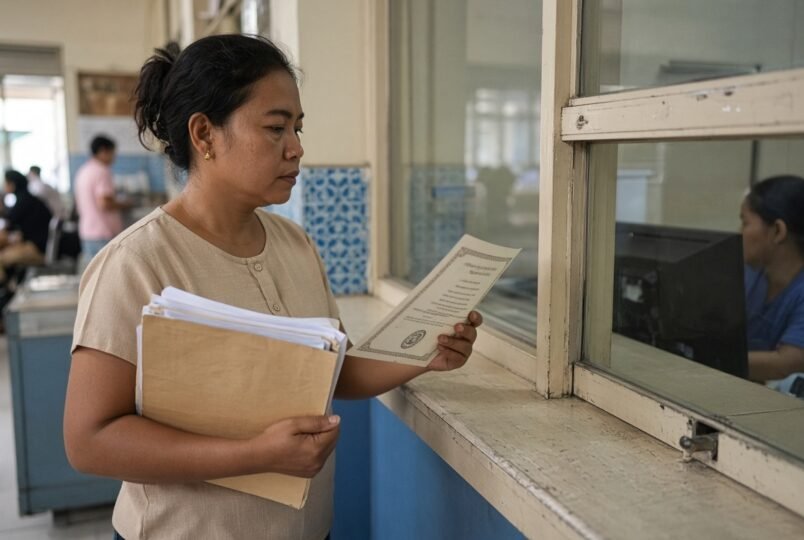
DSWD coordinates the program nationally, but the local government does the actual work. Your route is the City or Municipal Social Welfare and Development Office (C/MSWDO), or the Solo Parents Office or Division that your LGU has set up.
Forms, appointment systems and photo rules differ between cities. So ask your city or municipal hall for its current checklist and Citizen’s Charter before you gather papers. The Quezon City solo parent guide is a useful example, though it does not replace your own LGU’s list.
Who qualifies for a solo parent ID?
Solo-parent status is not limited to unmarried mothers. The law also covers fathers, some relatives and guardians, and pregnant women in certain situations. A social worker checks your category and your actual care and support arrangement, because marital status alone does not decide it. DSWD stressed this point in a February 19, 2026 clarification.
Categories based on the other parent’s situation
| Situation | Proof the office usually checks |
|---|---|
| Unmarried parent raising the child | Child’s birth certificate, CENOMAR, required affidavits |
| Death of a spouse | Marriage certificate and death certificate |
| Legal or de facto separation for at least six months | Court decree, or an affidavit of two disinterested persons for de facto separation |
| Annulment, nullity or recognized foreign divorce | Annotated marriage certificate and the court decision |
| Abandonment for at least six months | Affidavit of two disinterested persons plus police or barangay records |
| Spouse detained for at least three months, or serving a sentence | Certificate from the detaining agency or the court commitment order |
| Spouse physically or mentally unable to parent | Medical evidence issued within three months, or a valid PWD ID |
Other solo parent ID categories
| Situation | Proof the office usually checks |
|---|---|
| Mother of a child born of rape | Birth certificate, complaint affidavit, medical record; no conviction needed |
| Legal guardian, adoptive or licensed foster parent | Guardianship order, adoption decree or foster license |
| Relative up to the fourth civil degree caring for the child | Proof of relationship and of the parent’s death, absence or abandonment |
| Family member caring for an OFW’s child | OFW in low- or semi-skilled work, abroad 12 months straight; contract and travel records |
| Pregnant woman with sole care of her unborn child | Medical record of pregnancy and barangay and sworn affidavits |
These categories come from Sections 4 and 19 of the amended Act and Sections 12 and 13 of the revised implementing rules of September 29, 2022. For the OFW group, a spouse working abroad is not enough on its own, since the work-type and 12-month conditions must also hold.
Which children are covered
The law covers children who live with and depend on the solo parent, who are unmarried and unemployed, and who are 22 or younger. Older children still in school or training may be covered as well. A dependent over 22 also counts if a disability keeps them from caring for themselves. Note, however, that some benefits use a narrower age limit, as the discount section shows.
Support from the other parent
Being unmarried does not qualify you if the other parent shares care and support. On the other hand, the law says occasional help or seasonal gifts do not end your status by themselves. Regular support is a different matter, so describe your real custody and money arrangement to the social worker.
Solo parent ID requirements checklist
The revised rules ask for authenticated or certified true copies of certain records. Ask your office which originals it wants to see and how many copies to bring.
| Document | What to prepare |
|---|---|
| Application form | The current form from your local office |
| Child’s records | Birth certificate for each child, or pregnancy records if you are expecting |
| Barangay papers | The barangay certification or affidavit on residence and care, in the local format |
| Sworn declarations | The affidavit for your category, such as a non-cohabitation statement |
| Category proof | CENOMAR, marriage or death certificate, court order, medical or OFW records |
| ID and photo | Whatever ID and photo format your office asks for |
| Income proof, for income-tested benefits | ITR, affidavit of no employment, social case study or certificate of indigency |
The six-month periods for separation or abandonment are qualifying conditions, not residence rules. Your LGU still needs its own proof that you live there. Employed and unemployed applicants also tend to need different income papers.
How to apply for a solo parent ID
- Find the right office. Contact the C/MSWDO or Solo Parents Office where you live, and ask about appointments, online filing and affidavit forms.
- Gather your papers. Check that names and dates match across documents. If a record is missing, ask the social worker rather than signing an inaccurate affidavit.
- Submit and keep the acknowledgment. Note the date the office accepted your file as complete, because the seven-day standard counts from there.
- Attend the assessment and orientation. The rules call for a social worker’s assessment and a Solo Parents Orientation Seminar before release.
- Check the card and booklet. Confirm your name, your children and the validity date. If you plan to use the purchase discount, check that the card shows the eligibility details BIR requires.
Quezon City, for example, accepts applications and renewals through QC E-Services before its assessment step. That does not mean every LGU offers the same online route.
Processing time, fees and renewal
| Item | Rule under RA 11861 and the revised IRR |
|---|---|
| Release time | Within seven working days after complete documents are received |
| ID and booklet fee | Free |
| Validity | One year, renewable after assessment |
The seven-day standard covers the office’s part only, so gathering records and booking a slot can take longer. Copies, photos and notarized affidavits may also cost money even though the card itself is free. Be wary of fixers who promise approval for a fee.
To renew a solo parent ID, ask for the renewal checklist before the card expires. Bring the old card and any updated papers, and report changes such as remarriage or a new support arrangement.
Benefits a solo parent ID can unlock
Each benefit has its own test. Holding a solo parent ID proves your status, while each benefit still checks income, work history or other conditions.
| Benefit | Main conditions |
|---|---|
| Parental leave | Up to seven working days a year, for employees with at least six months of service; on top of other leave, not cumulative |
| 10% discount and VAT exemption | On set items for children six and under, if the parent earns less than ₱250,000 a year |
| ₱1,000 monthly cash subsidy | For solo parents earning minimum wage or less, not receiving other cash aid; run through the LGU |
| PhilHealth coverage | Solo parent and dependents covered once the PhilHealth record is updated |
| Education, livelihood and housing | Priority in some programs, subject to each program’s own rules |
How the purchase discount works
Under BIR Revenue Regulations No. 1-2023, the income limit is strictly below ₱250,000 a year. The discount covers baby milk, food and micronutrient supplements, diapers, medicines, vaccines and medical supplies for the child. It is not a discount on all groceries. Medicines and vaccines also need a prescription in the child’s name, and you must show both the card and the booklet.
Take a parent earning ₱20,000 a month, or ₱240,000 a year, who buys ₱1,120 of formula for a three-year-old. The VAT comes off first, leaving ₱1,000, and the 10% discount then brings it to ₱900. A parent earning ₱21,000 a month, by contrast, crosses the limit at ₱252,000 and gets no purchase discount, although the leave benefit still applies.
The cash subsidy
The ₱1,000 monthly subsidy is means-tested. Other government cash aid generally rules you out, except senior citizen or PWD benefits. Ask your LGU whether you need a separate subsidy application, because the ID application does not automatically enroll you.
PhilHealth change from October 2026
PhilHealth Circular No. 2026-0015 came out on September 26, 2026. Its official FAQ says that from October 2026, the government may pay the employee share of premiums for qualified employed solo parents. That applies once PhilHealth updates and validates your record, while your employer still pays its own share.
To update, file the PhilHealth Member Registration Form with copies of both sides of a valid card. Employees should also work with HR on the employer certification. If your card expires without a reported renewal, your PhilHealth classification can change, although you keep your coverage under the Universal Health Care Act.
Common solo parent ID mistakes
- Treating the card as a subsidy enrollment: the cash aid needs its own assessment.
- Expecting a discount on everything: only listed child items qualify, and only for children six and under.
- Letting the card lapse: an expired card can change your PhilHealth status and stop the discount.
- Signing an affidavit that does not fit: a false sworn statement can cost you the ID and create legal trouble.
- Paying a fixer: the ID and booklet are free under the law.
Local tip: Keep a folder with certified copies of your child’s birth certificate and your category papers. You will need them again at renewal and for PhilHealth or school applications.
Solo parents who also need help with medical or burial costs can check the DSWD AICS program. Our guide to the PhilHealth Member Data Record explains how to check your PhilHealth record after updating.
Frequently asked questions
Can fathers or grandparents get a solo parent ID?
Yes, if they fit a category. Fathers are included, and a grandparent can qualify as a relative caring for the child after the parent’s death, absence or abandonment. Helping with costs or babysitting alone does not qualify.
Can I apply online?
Only if your LGU offers it. Quezon City does through QC E-Services, so check your own LGU’s instructions before you go.
What if my application is delayed or denied?
Ask for the reason in writing, along with the rule or checklist item involved. Then find out whether the issue is a missing paper or your category. Keep your acknowledgment and follow the office’s review process.
Based on RA 11861, the revised IRR of September 29, 2022, BIR RR 1-2023, PhilHealth Circular 2026-0015 and DSWD guidance, as of October 2026. This is general information, not legal advice. The issuing office decides each application.