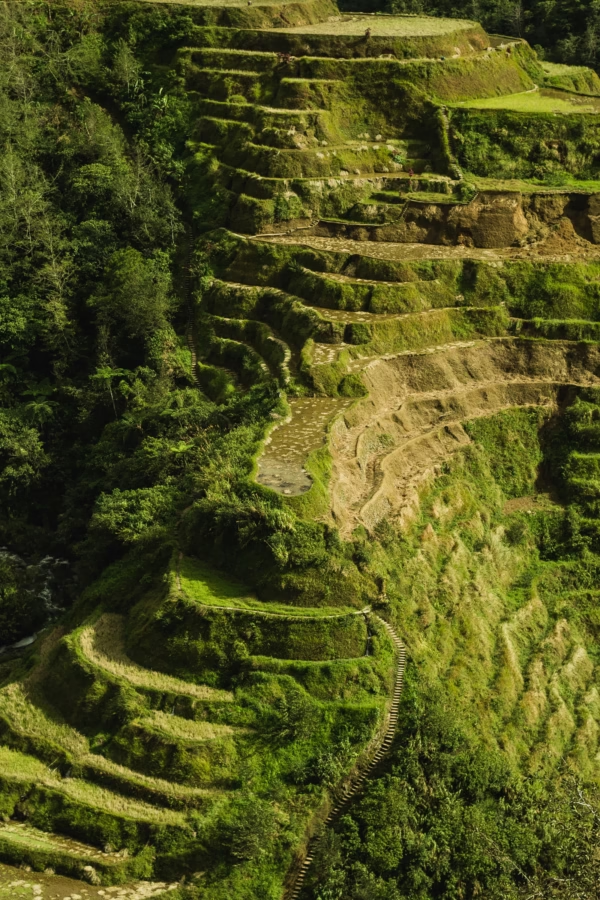
The Banaue rice terraces are part of an Ifugao landscape where farming, villages and mountain paths belong together. A good visit starts with two decisions: whether you want roadside views around Banaue town, and whether you have time and energy for a separate visit to Batad. [1][2]
This guide follows the journey from Manila to Banaue, then covers the main viewpoints, Batad, the rice-growing cycle, places to stay and the costs to confirm before leaving. You do not need to fit every terrace and waterfall into one day.
Quick take: Reserve a full overnight travel block from Metro Manila. Use Banaue town for a flexible base, and treat Batad as a separate road transfer plus walking. Arrange the return journey before setting out, and confirm the current trail conditions rather than relying on an old itinerary.
Getting to Banaue from Manila
An overnight bus is a practical starting point for a Manila-based trip. Coda Lines lists Manila to Banaue on its official website; Bookaway also lists Coda Lines and Ohayami Trans on the route. Availability, departure time and vehicle class must be checked for your chosen date. [3][5]
For Coda Lines, the published Quezon City station is HM Transport Terminal, Monte de Piedad Street corner Maryland Street, Barangay Immaculate Concepcion. Its Banaue listing places the station below the Tourist Information Center, with the Tourism Office as the waiting area. Follow the terminal and meeting instructions on your actual ticket, especially when choosing a different operator. [4]
Bookaway advertises Manila to Banaue journeys of approximately 8 to 10 hours, while its Quezon City route page lists a Coda Lines estimate of 9 hours 20 minutes. These are booking-site estimates, not guaranteed arrival times. Allow additional time for getting to the terminal, boarding and delays before arranging activities or onward connections. [5]
Before paying, check the departure terminal, arrival point, bus class, luggage allowance, cancellation rules and the final charge. Save the ticket and the operator contact offline. For a private vehicle, request a written quote that includes the full pickup-to-drop-off route, stops and any driver or overnight costs.
When combining Banaue with Baguio, Bontoc, Sagada or Kiangan, plan each transport leg separately. Do not assume that a bus passing through a nearby town provides a convenient connection to your accommodation. An itinerary should show the actual transfer point and an alternative when the connection does not work.
A note on the overnight bus
An overnight journey can save daytime travel, but arrival is not the same as being rested or checked into a room. Ask your accommodation whether it can receive you early, store bags, provide breakfast or offer a room before normal check-in. Keep the first day flexible instead of paying for an ambitious trek immediately after the bus.
Pack a layer within reach for the journey, together with water, your ticket and a charged phone. Confirm whether your selected bus has a toilet and where the planned breaks are. Keep essential medication and valuables in your small bag rather than the luggage compartment.
The main Banaue viewpoints
The town-based option is to arrange transport to roadside terrace viewpoints and return to Poblacion, the town center. Choose it when you want shorter outings or a flexible first day. Ask the driver or host about steps, walking distance, parking and the exact stopping point; a roadside viewpoint is not automatically step-free.
Banaue and Batad are not interchangeable names. Batad is a village within the municipality of Banaue, with a distinctive amphitheater-shaped terrace setting. Getting to a roadside Banaue viewpoint does not mean you have completed the journey to Batad. [2]
| Option | What to plan for | Questions to settle first |
|---|---|---|
| Banaue town viewpoints | Shorter individual stops with a return to your town accommodation. Treat this as the flexible option after overnight travel. | Which viewpoints are included? How many steps and how much walking does each stop involve? |
| Batad day visit | A road transfer, a walk to the village or chosen viewpoint, time on site and the climb back to the pickup point. | Where does the vehicle stop? What route is open? Who provides the return transfer and at what time? |
| Batad overnight stay | A room in or near the village, baggage arrangements and a walking route suitable for your group. | How far is the room from the road? Are meals, a porter and the next-day transfer available? |
UNESCO inscribed the Rice Terraces of the Philippine Cordilleras in 1995. The property contains five clusters: Nagacadan, Hungduan, Mayoyao, Bangaan and Batad. The last two are in Banaue. The familiar roadside terraces around town should not be described as a separate UNESCO-inscribed cluster. [1]
Batad: the amphitheater terraces
Batad rewards a slower plan rather than a checklist. The Department of Tourism describes its terraces on steep mountain slopes. Choose the village and viewpoint route with your local guide or host, considering your group’s walking ability and the condition of the paths. [2]
Be precise about the drop-off point. A road junction, a saddle and the current vehicle turnaround point can mean different walking distances. Ask your accommodation to mark the meeting point and explain the route from there. Arrange where to leave large luggage, and confirm porter arrangements before bringing a suitcase down a path.
As one accommodation-specific example, Batad Village Homestay describes a 20 to 30 minute approach on foot from the drop-off point, depending on pace. That is not a universal time for reaching every property, touring the terraces or returning uphill. Its own website also offers paid local transport by advance arrangement. [6][7]
A local guide is a sensible choice for terrace walks and routes beyond the basic approach. Ask the Banaue tourism desk or Barangay Batad which registration, guide and route requirements apply to your exact plan. Confirm the guide’s meeting place, route, turnaround time and rate; this guide does not establish a universal rule that every path can be walked independently.
Check current access before adding a waterfall trek
An official report dated July 23, 2026 described repair work on storm-damaged sections of the Batad terraces. A separate GMA report dated April 20, 2026 described a temporary closure of a Tappiya Falls trail following fire-related rockfall concerns. These are dated reports, not proof that all routes are closed today or that a particular route has reopened. [8][9]
Confirm current access locally before going to Tappiya Falls. This review did not independently establish the reopening status of that trail. Do not follow an old online detour without current local clearance. Make the waterfall optional, and respect barriers, repair work and instructions from the community.
For a day trip, agree the return pickup and a backup contact before leaving Banaue. Do not depend on an assumed fixed morning jeepney or on finding a vehicle when you finish. For an overnight stay, confirm the next-day transport when arranging the room.
Best time to visit the Banaue rice terraces
Separate two questions: what will the rice fields look like? and will the route be suitable to visit? IRRI explains that planting dates depend on location, variety, weather, water availability and the intended harvest. That guidance does not establish one month when every Banaue and Batad field will be green. [10]
For photographs of growing rice, ask a host near the specific terraces you plan to visit for a recent, dated photo and the expected crop stage during your stay. Ask whether fields are being prepared, newly planted, growing, harvested or resting. A picture from another village or an earlier year is not a reliable forecast.
Green rice is only one way to experience the landscape. Plan around the stage you want to see, but leave room for cloud cover, rain and changes to the walking route. Check PAGASA’s Northern Luzon forecasts and advisories and ask your host about local road and path conditions shortly before departure. [11]
Where to stay: Banaue town or Batad?
For a first visit, a town base is the flexible planning choice when transport, luggage storage and shorter outings matter more than a terrace-facing room. Check the property’s location against your bus arrival point and ask how transfers will be arranged. The advertised view should not be your only booking criterion.
A Batad stay places the walking approach into your accommodation plan. Choose it when you are comfortable carrying or arranging help with baggage and spending the night away from the vehicle drop-off. Confirm the walk with the specific property, rather than using another guesthouse’s directions. [7]
Before reserving, ask about stairs, room access, bathroom arrangements, hot water, meal times, charging facilities and the connectivity you need. Confirm the total for your dates, the payment method and the cancellation policy. A listed amenity is worth checking directly when it is essential to your stay.
Entrance fees, guides and your trip budget
A current, complete local fee schedule was not independently verified for this guide. Obtain the latest registration and site charges from the tourism desk and the relevant barangay, and request an itemized transport or tour quote. Do not assume one fee or one package covers every viewpoint, village, guide and transfer.
| Expense | Check the charging basis | Confirm before paying |
|---|---|---|
| Intercity bus | Per person, each direction. | Correct terminal, date, class, booking charges, luggage rules and the return ticket. |
| Local transport | Per passenger or per vehicle. | Named stops, waiting time, return pickup, passenger capacity and any additional charges. |
| Registration and site fees | Ask whether charged per visitor, location or visit. | The current amount, where it is paid, what it covers and a receipt where available. |
| Guide or porter | Per guide, group, route or service. | Route, duration, number of guests, baggage limits and whether either service is included in a package. |
| Accommodation | Per room or per person, per night. | Meals, early arrival, baggage storage, bathroom facilities and cancellation terms. |
| Meals and contingency | Personal spending allowance. | Cash for meals and drinking water, plus funds for a changed transfer or additional night. |
For a group, divide only the genuinely shared costs by the number of people paying. A private vehicle quote may be shared; individual bus tickets and meals are separate. Compare the total itinerary cost, not just the lowest advertised bus fare or room price.
A three-day Banaue and Batad planning outline
The outline below is a PinoyTips planning suggestion, not a tour schedule. It assumes arrival after overnight travel, a town-based first night and locally confirmed access. Shorten the walking plan rather than compressing transport buffers.
- Day 1: arrive, recover and see town viewpoints. Arrange baggage storage or early check-in, have a meal, confirm the next day’s route and take a shorter viewpoint outing if conditions permit.
- Day 2: visit Batad at a measured pace. Use the agreed road transfer, meet your guide and follow the permitted village or terrace route. Return to Banaue at the arranged time, or stay in Batad only when the room and next-day transport are confirmed.
- Day 3: leave a margin before departure. Return from Batad if needed, collect stored bags and keep the final hours flexible. Skip an extra trek when it would put your booked bus at risk.
With only two days, use Banaue as the base and choose a manageable Batad day visit or additional town viewpoints, rather than adding an overnight village move and a waterfall trek. A traveler who needs an easier route can build the visit around accessible stops confirmed in advance.
Practical tips for the Cordillera trip
Cash and communication: Carry enough cash for the bookings and local services you have confirmed, plus a reserve. Ask about card or digital-payment acceptance instead of assuming it. Download tickets, accommodation directions and essential contacts; make a meeting plan that still works without a mobile connection.
Footwear and weather: Use shoes that fit well and have suitable traction, and carry a rain layer. Discuss steps and the return climb before choosing a walk. Turn back or change plans when your guide or local authorities advise it; shoes and poles cannot make an unsafe or closed path suitable.
Respect farms and households: The terraces remain a lived-in agricultural landscape, not an open-access photo set. Ask before photographing people or entering private spaces. Stay on the locally approved route, keep clear of crops and irrigation channels, take rubbish back and avoid interrupting farm work. [1]
Have a simpler alternative: Ask your accommodation to suggest an appropriate shorter outing when the planned route is unavailable. Do not replace a closed trail with an unverified shortcut. A flexible room or transport booking may be more useful than an extra activity that cannot be changed.
Recommended gear for this trip
Start with equipment you already own and are comfortable using. A small daypack, a suitable layer and well-fitting footwear may be more useful than buying several new items. The products below are optional examples, not requirements for visiting the terraces.
Affiliate disclosure: As an Amazon Associate I earn from qualifying purchases. The optional Amazon links below may earn PinoyTips a commission at no additional cost to you.
This is a planning guide, not a hands-on product test. Photos illustrate the product families; color, size, generation and included accessories can differ from the linked offer. Check the exact listing, seller, instructions and delivery availability. Read our Affiliate Disclosure.

Footwear for the route you choose
Merrell Moab 3 Mid Waterproof Hiking Boots
Merrell lists a waterproof membrane and a Vibram outsole for the Moab 3 Mid Waterproof range. Prioritize fit and comfort over buying a new pair specifically for this trip. No boot guarantees grip on wet steps or unstable ground. [12]
Before buying: Check your size, width and the exact waterproof model. Walk in the boots before a longer outing.
View on Amazon
Optional support on uneven steps
Cascade Mountain Tech Aluminum Trekking Poles
Cascade Mountain Tech’s aluminum cork-grip range uses adjustable poles. They may be useful when you prefer extra contact points, but ask your guide about their use on narrow paths and inspect the locks before setting off. [13]
Before buying: Check the model’s packed length, adjustment range, included tips and baggage rules.
View on Amazon
Carry the essentials, not all your luggage
Osprey Daylite Daypack
A Daylite-family pack is an option for water, a layer and small essentials. The Amazon listing may show a prior-season model, so do not assume the current manufacturer page and every listing have identical features. [14]
Before buying: Check capacity, fit and the specific version. Do not assume a daypack is waterproof; protect contents appropriately.
View on AmazonFrequently asked questions
How do I get from Manila to Banaue?
Compare the date-specific overnight bus options and confirm the departure terminal. Coda Lines provides an official Manila to Banaue booking route; Bookaway also lists Ohayami. Reserve the full overnight travel block and avoid a tight activity or flight connection based on an estimated arrival. [3][5]
Are the Banaue rice terraces and Batad the same place?
Batad is within the municipality of Banaue, but visiting it requires a separate local journey from town. Banaue roadside viewpoints and a Batad village trek are different activities. Specify which one you mean when arranging transport. [2]
What is the best month to see green terraces?
There is no verified single green month for every terrace in this guide. Ask about the current crop stage at your chosen site and request a recent photo. The rice calendar depends on local growing conditions, not just the month printed on a tourism calendar. [10]
Do I need a guide, and can I visit Tappiya Falls?
Ask the local tourism desk or Barangay Batad about requirements and the currently permitted route. A guide is recommended for terrace walks. Tappiya Falls should remain optional until local access is confirmed; the dated closure report cited here is not a present-day opening notice. [9]
Can I visit without a long hike?
Build the trip around individually checked town viewpoints and vehicle-accessible stops. Ask about stairs, surfaces and the distance from parking to the view. Do not book an accommodation reached on foot without confirming that approach suits everyone in your group.
What should I pack for Banaue?
Bring footwear suitable for your selected route, a light warm layer, rain protection, water, cash and offline copies of bookings. Keep the walking bag light and arrange storage for the rest. Check the forecast and your guide’s route-specific advice before departure.
Sources and contact
The links below identify the basis for factual details in this guide. Operator and booking pages can change; a listing is not a confirmed seat, room or open trail. Source review date: October 2, 2026.
- UNESCO World Heritage Centre: Rice Terraces of the Philippine Cordilleras. Official heritage record. Identifies the five inscribed terrace clusters, including Batad and Bangaan in Banaue. Not a current access advisory.
- Department of Tourism: Ifugao. Official destination information. Regional heritage context and the location and character of Batad.
- Coda Lines: official routes and booking links. Operator. Manila to Banaue route and official booking channels; availability must be checked for the travel date.
- Coda Lines: stations. Operator. Quezon City departure-terminal address and Banaue station information.
- Bookaway: Manila to Banaue and Quezon City to Banaue. Booking seller. Lists Coda Lines and Ohayami options. Journey estimates and booking results are not guaranteed departures. Also see the Quezon City route listing.
- Batad Village Homestay: transport arrangements. Accommodation provider. Describes advance coordination for paid local transport. Its undated public-jeepney timetable is not treated as current.
- Batad Village Homestay: host description on Booking.com. Host listing. Host describes a 20 to 30 minute walk from the drop-off point to this property, depending on pace. Not a full Batad trek duration.
- Philippine Information Agency: Batad terrace restoration. Dated agency report. July 23, 2026 report of repair work after storm damage; not a real-time closure or completion notice.
- GMA Regional TV: fire and Tappiya Falls trail restriction. Dated news report. April 20, 2026 report of a temporary trail closure. Current reopening or permitted detours were not independently verified.
- IRRI Rice Knowledge Bank: planting. Agricultural research organization. Explains factors affecting rice planting dates. Does not supply a Banaue visitor calendar.
- PAGASA: Northern Luzon regional forecasts and advisories. Official weather service. Check forecasts and advisories before travel; this article does not reproduce a live forecast.
- Merrell: Moab 3 Mid Waterproof. Manufacturer. Product-family waterproof-membrane and outsole information, not a hands-on review or a slip-prevention guarantee.
- Cascade Mountain Tech: aluminum poles with cork grips. Manufacturer. Adjustable pole product-family information; confirm exact linked model and included accessories.
- Osprey: Daylite. Manufacturer. Current Daylite-family reference. The retained Amazon link can show a prior-season model; current specifications are not assigned to that older listing.
Travel note: Confirm fares, fees, accommodation arrangements, weather and access restrictions with the relevant provider or local office before departure. PinoyTips is an independent information website, not the transport operator or tourism authority.
For a source-backed update about this guide, email admin.pinoytips@gmail.com with the location, date and supporting link. See our About Us and Disclaimer pages.